Since 1959
A Legacy of Innovation
From the drawing board of Sir Alec Issigonis to the streets of the world — the Mini's evolution across seven decades.
1959–2000
The Classic Era
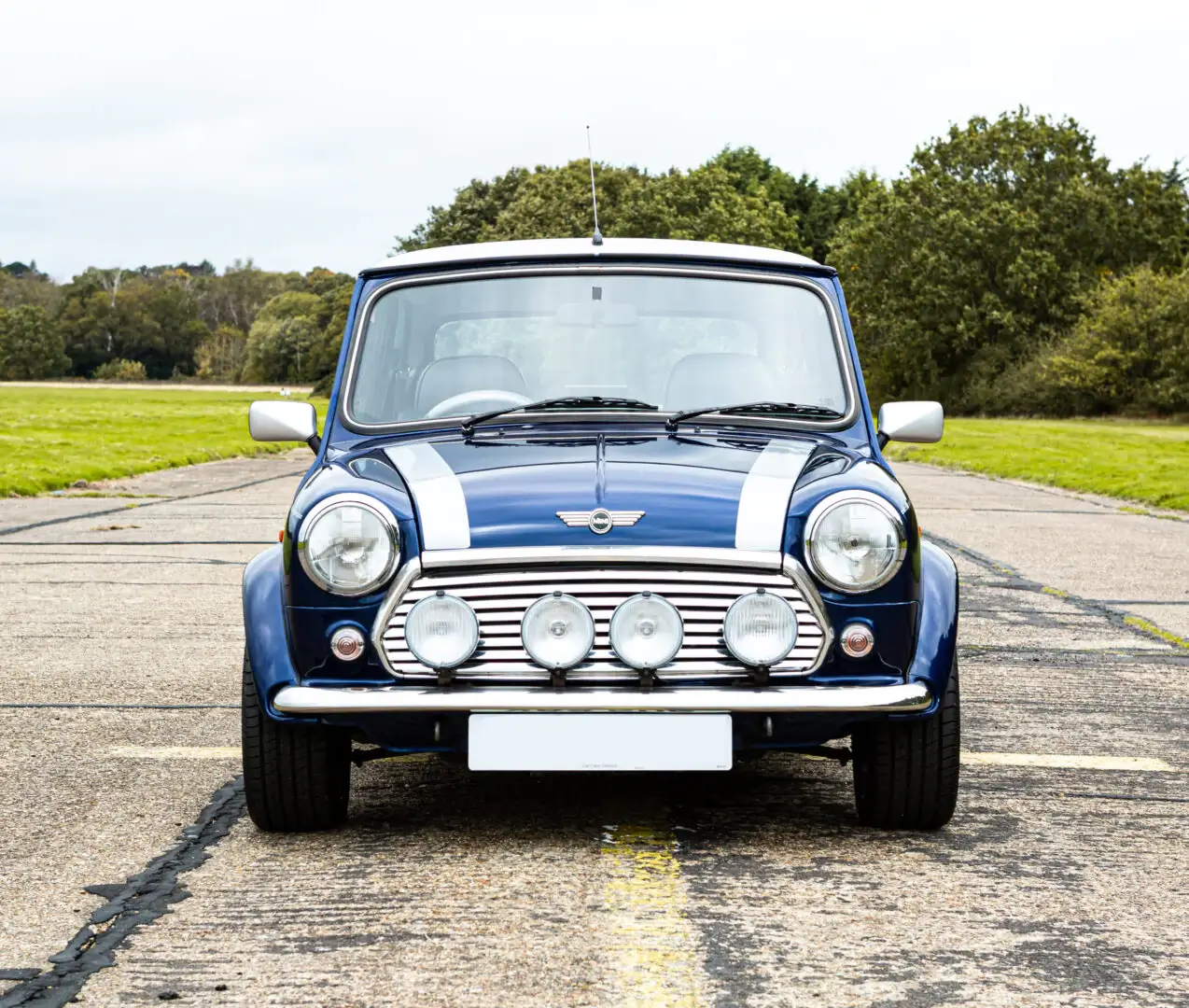
The original Mini was born from necessity — the 1956 Suez Crisis demanded a fuel-efficient car that could seat four adults. Sir Alec Issigonis's revolutionary design placed the engine transversely, driving the front wheels, maximizing interior space within a body just 10 feet long.
2001–Present
The Modern Era
When BMW acquired the Mini brand, they faced the challenge of modernizing an icon. The result was a car that respected its heritage while embracing contemporary engineering, safety, and technology standards.
R50 / R53 (2001–2006)
BMW's first-generation MINI. The R53 Cooper S featured a supercharged 1.6L engine. A modern reinterpretation that honored the original's spirit.
R56 (2006–2013)
Second generation with turbocharged engines replacing superchargers. Enhanced refinement while maintaining go-kart handling.
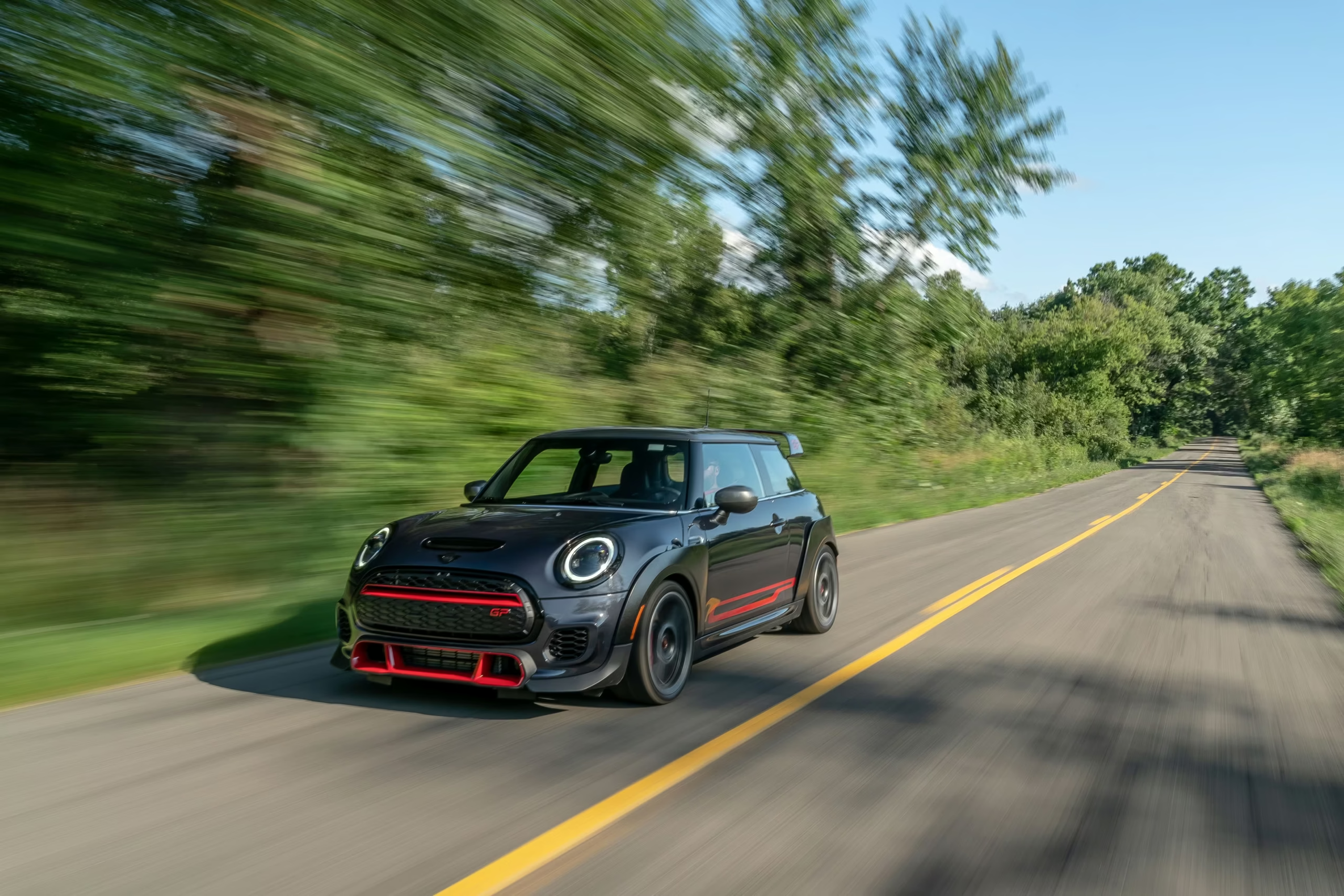
F55 / F56 (2014–2024)
Third generation with UKL platform. Larger dimensions, advanced technology, and both petrol and electric variants.
2024+ Electric Era
The MINI Cooper transitions to a fully electric future while the JCW line preserves combustion heritage for enthusiasts.